What Actually Happens When You Ship a Car
Most people picture their car strapped to a truck and hope for the best. The reality is a lot more organized — and a lot more protective of your vehicle — than that mental image.
When you learn how to ship a car, you're really learning a four-step chain: quote, booking, pickup, and delivery. Each step has a specific player, a paper trail, and a window of time. Miss a detail in any one of them and your experience goes sideways fast.
At Car Shipping Hub, we've processed thousands of shipments across every major corridor in the country. This guide walks you through the whole process the way a dispatcher would explain it to a family member — plain language, real numbers, no filler.
Open Carrier vs. Enclosed Trailer: Pick the Wrong One and Pay for It
This is the first real decision you'll make, and it affects both your cost and your car's protection level.
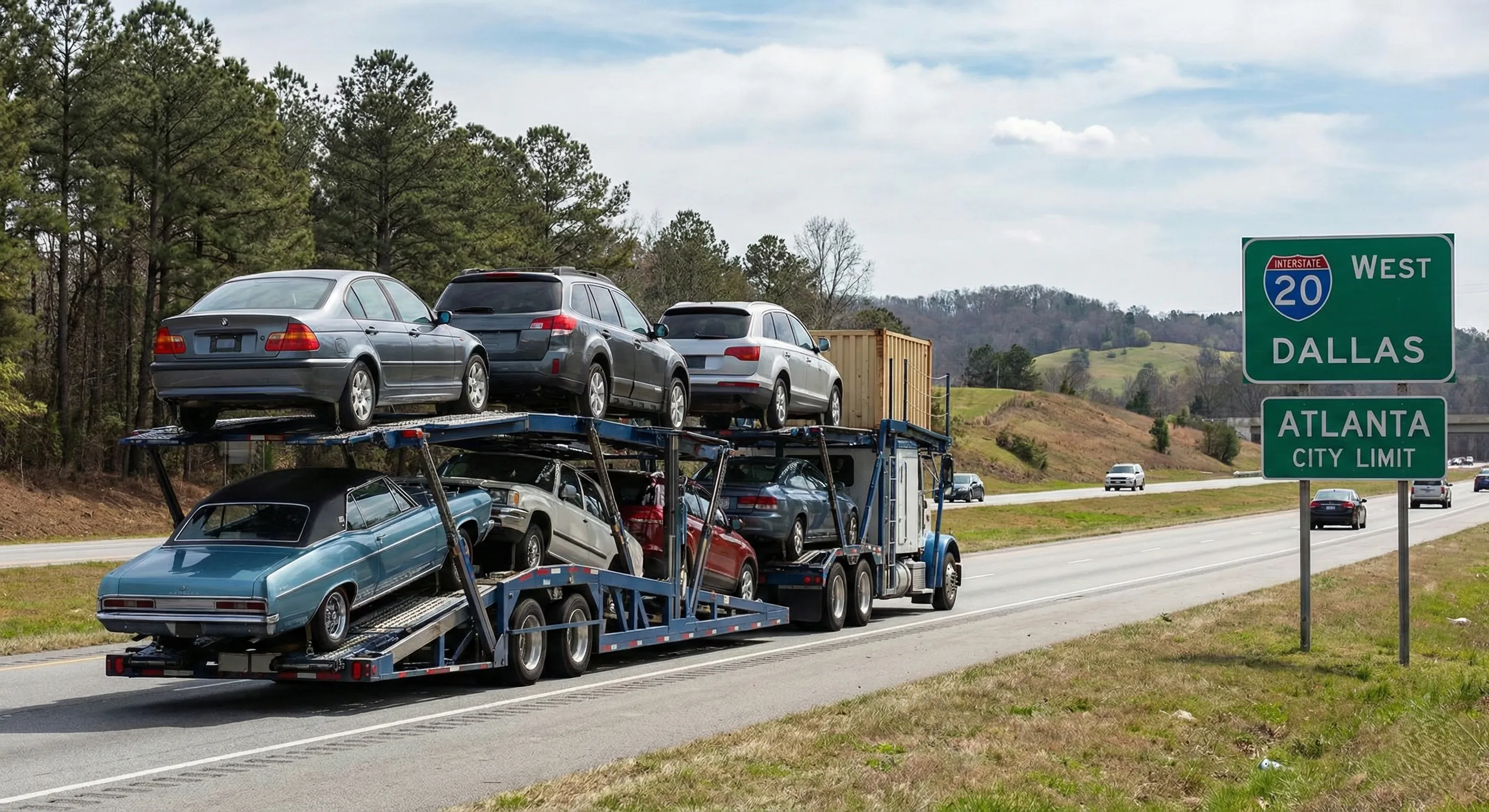
Open carriers are the double-decker trucks you see on the interstate hauling 7 to 10 cars at once. They're exposed to weather and road debris. But they're also the workhorse of the industry — roughly 90% of all vehicles in the US ship on open carriers.
Enclosed trailers hold 1 to 6 cars inside a fully covered, lockable container. They're used for luxury vehicles, classics, exotics, and anything with a custom paint job that the owner never wants touched by a stray pebble.
| Feature | Open Carrier | Enclosed Trailer |
|---|---|---|
| Typical cost (sedan, 1,000 miles) | $700 - $1,100 | $1,200 - $1,900 |
| Vehicle capacity per truck | 7 - 10 cars | 1 - 6 cars |
| Weather exposure | Yes | No |
| Carrier availability | Very high | Moderate |
| Best for | Standard, daily-driver vehicles | Luxury, classic, or exotic cars |
| Avg. transit time (1,500 miles) | 4 - 7 days | 5 - 9 days |
Here's the insider take: open carriers are safe for the vast majority of cars. Damage rates are extremely low. If your car has standard paint and you don't lose sleep over weather, go open and pocket the savings.
How Car Shipping Costs Are Actually Calculated (Not Guesswork)
The rate you see on a quote isn't random. Carriers use a formula built on five variables, and knowing them helps you spot a bad deal immediately.
- Distance — The biggest cost driver. Rates drop per mile on longer hauls. A 500-mile shipment might cost $1.50 per mile while a 2,500-mile run might cost $0.65 per mile.
- Vehicle size and weight — A full-size pickup or SUV costs $100 - $300 more than a standard sedan on the same route. Bigger vehicles take up more truck space and add weight, which cuts into the carrier's fuel efficiency.
- Carrier type — Open vs. enclosed, as covered above.
- Seasonal demand — Summer months and the October-to-December snowbird migration south spike prices by 15% to 30% on popular corridors like I-95 and I-75.
- Route popularity — Shipping from Los Angeles to New York is easy because trucks run that corridor constantly. Shipping from rural Montana to rural Mississippi? Expect to wait longer and pay a premium.
Want to skip the math? Use Car Shipping Hub's cost calculator to get a real-time rate based on your exact route, vehicle, and timeline.
The 6-Step Process From First Quote to Final Delivery
Here's the full process, laid out the way a dispatcher would walk a first-timer through it.
- Get at least 3 quotes. Rates vary between brokers and carriers. Don't book the first number you see. Compare quotes with similar pickup windows — a 3-day window vs. a 10-day window will show very different prices.
- Book your shipment. You'll pay a small deposit (typically $100 - $200) upfront. The rest is due on delivery, paid directly to the driver in cash or certified funds. Be cautious of companies demanding full payment upfront before your car is even assigned to a truck.
- Prep your vehicle. Remove all personal items. Most carriers won't insure contents inside the car, and excess weight adds cost. Leave about a quarter tank of gas — enough for loading and unloading but not so much you're paying to haul extra fuel weight across the country.
- Pickup day — the Bill of Lading inspection. Before the driver loads your vehicle, both of you walk around it together. Every scratch, ding, and chip gets noted on the Bill of Lading (BOL). Take your own timestamped photos from every angle. This document is your legal protection if any damage happens in transit.
- In-transit tracking. Most reputable brokers provide a dispatcher contact and real-time updates. If your carrier does not give you a point of contact, that is a yellow flag worth noting.
- Delivery and final inspection. When your car arrives, do the walk-around again before you sign anything. Compare the car's condition to your BOL photos. If there's new damage, note it on the delivery BOL before signing. Signing first removes your legal leverage.
To see how this maps onto a real shipping timeline, read through how our end-to-end transport process works — it walks through each handoff point with examples.
Why Your Pickup ZIP Code Changes Everything
Carriers run on established lanes — predictable routes they fill regularly. Think of it like a bus route. If you live near a major terminal or a high-traffic origin city, trucks run through your area constantly and your pickup window is short.
If you're shipping from a rural area far off an Interstate, you may need a terminal meet — driving your car to a central hub where it joins a truck heading your direction. This adds a day or two but can save you $100 - $200 on the overall rate.
Pro Tip from Dispatch: The fastest pickups happen on Monday through Wednesday. Drivers closing out their week tend to finalize loads by Thursday. If your pickup window starts on a Friday, plan for a Monday actual pickup rather than counting on same-day service.
Shipping to or from a specific state? Check the California auto transport location page — or browse any state — for corridor-specific transit times and tips that apply to your exact route.
4 Red Flags That Signal a Scam Before You Pay a Dime
Auto transport has a handful of bad actors who prey on first-time shippers. Here's what they look like and how to spot them before you lose money.
- No MC number listed. Every legal carrier must have a Motor Carrier (MC) number registered with the FMCSA. If a company won't give you their MC number upfront, walk away. You can verify any carrier at safer.fmcsa.dot.gov in under 60 seconds.
- Full payment required before dispatch. Legitimate brokers take a small deposit. Full prepayment is the number one sign of a phantom broker — someone who takes your money with no intention of booking a real truck.
- Unusually low quotes. If a quote comes in 30% or more below every other estimate you received, it's bait. The tactic is called bait-and-switch: you book at $650, then on pickup day the driver demands $1,100 because of extra fees — and your car is already loaded.
- No physical address or vague contact info. Reputable companies have a real address, a direct phone number, and a named contact. A generic Gmail address with no business name is a major red flag.
Our trusted partner, Furious Auto Shipping, runs background checks on every carrier in their network — a layer of protection that most solo brokers skip entirely.
Door-to-Door vs. Terminal Shipping: Which One Fits Your Situation
You have two pickup and delivery options with most carriers.
Door-to-door means the carrier picks your car up from your home address and drops it at your destination address. It's the most convenient option and the most popular. The driver does need a street wide enough and safe enough to maneuver a large truck — if you live on a narrow residential street, you may need to meet them at a nearby parking lot or gas station instead.
Terminal-to-terminal means you drop your car at a central depot and pick it up from a depot at the other end. It's cheaper (usually by $75 - $150) but adds 1 - 3 extra days and requires you to have transportation to and from the terminals on both ends.
For most families moving across states, door-to-door is worth every extra dollar. For people with flexible schedules or tight budgets, terminal shipping is a smart move.
Frequently Asked Questions
How long does it take to ship a car from one state to another?
Transit times depend on distance. Most carriers cover 400 to 500 miles per day. A 1,000-mile haul typically takes 2 to 4 days in transit, while coast-to-coast shipments usually run 7 to 10 days from pickup to delivery.
How much does it cost to ship a car across the country?
Coast-to-coast auto transport on an open carrier averages $1,100 to $1,600 for a standard sedan. SUVs and trucks run $200 to $400 more. Enclosed transport adds another 40% to 60% on top of those figures.
Is my car insured while it's being transported?
Yes. All licensed carriers are required by the FMCSA to carry cargo insurance. Coverage minimums vary, so ask your carrier for their certificate of insurance before booking. For high-value vehicles, consider a supplemental policy through your personal auto insurer.
Can I put personal items inside my car during shipping?
Technically yes on most carriers, but it's not recommended. Items inside the vehicle are not covered by cargo insurance. Most carriers allow up to 100 lbs. in the trunk only. Never leave valuables, electronics, or anything fragile inside.
How do I get started with Car Shipping Hub?
Car Shipping Hub makes it simple. Enter your route and vehicle details to get a free, no-obligation quote in under two minutes. A real dispatcher reviews your order — not an algorithm — and assigns a vetted carrier to your shipment.
What's the difference between a broker and a carrier?
A carrier owns and operates the actual trucks. A broker connects you to carriers and manages the booking process. Most shippers work with brokers, which gives them access to a larger network of trucks and better lane coverage across the country.
Ready to Ship? Here's Your Next Move
You now know more about auto transport than most people who have already shipped a car. You understand the difference between open and enclosed carriers, how pricing actually works, what the Bill of Lading does, and which red flags to watch for.
The next step is simple: Get Your Free Quote from Car Shipping Hub and see your real rate in under two minutes. No pressure, no commitment — just a real number from a team that dispatches real trucks.
Have a specific route in mind? check current rates for your route and compare open vs. enclosed pricing side by side before you decide.
We're here when you're ready. Your car will be in good hands.